
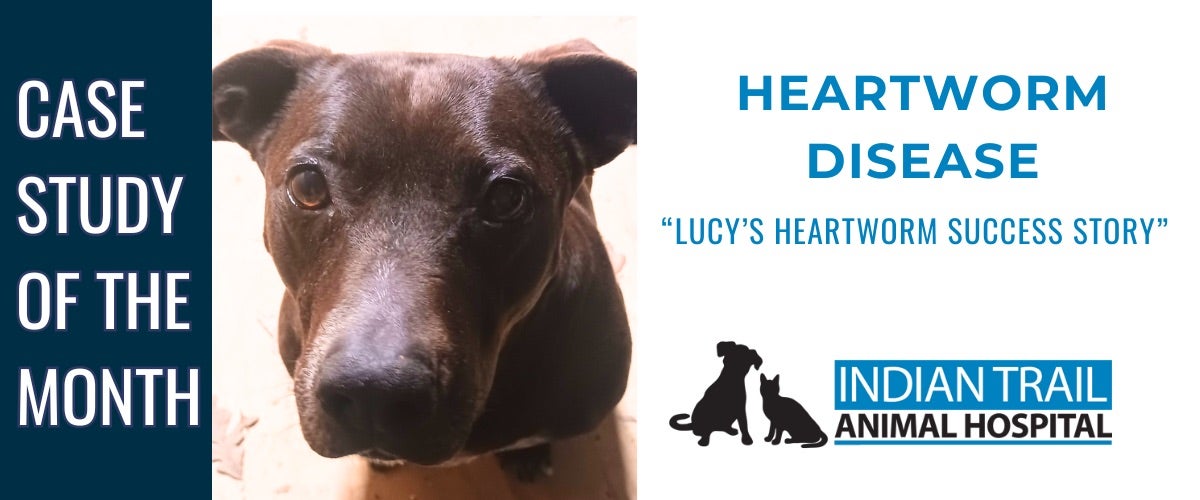
 Lucy’s Heartworm Success Story
Overview
Lucy came to Indian Trail Animal Hospital for a routine wellness screening and tested positive for heartworm disease. Thanks to early detection and a carefully managed treatment plan, Lucy did very well through treatment and is now back to enjoying life with long-term protection in place.
Patient Background 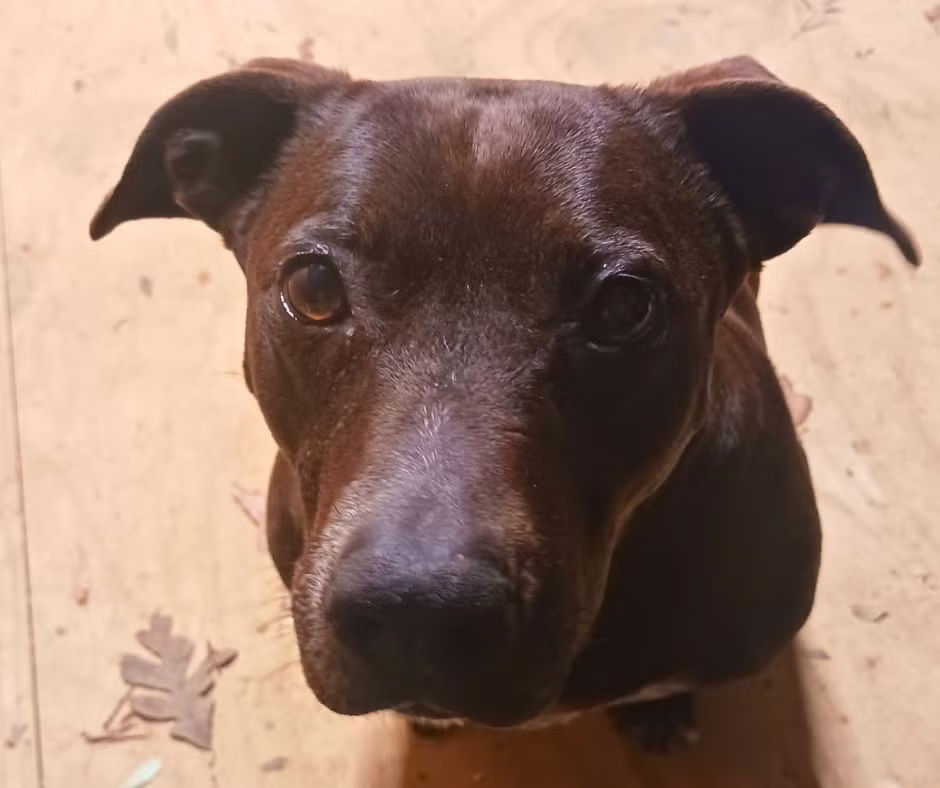
- Patient Name: Lucy
- Visit Type: Routine wellness screening
- Primary Finding: Positive heartworm test
How We Diagnosed Heartworm Disease
Lucy’s initial heartworm screening test came back positive. To confirm the diagnosis and better understand the severity of infection, our veterinary team performed additional testing, including evaluating a blood sample for evidence of immature heartworms circulating in her bloodstream.
This step allowed us to create a treatment plan tailored to Lucy’s needs while prioritizing safety and minimizing potential complications.
Treatment Plan
Heartworm treatment is a multi-step process, and Lucy’s care plan was designed to address the disease gradually and safely.
Step 1: Preparing the Body for Treatment
Lucy was started on heartworm prevention to help eliminate immature heartworms and reduce the number of circulating parasites in her bloodstream. This preparation phase helps make later treatment safer and more effective.
Step 2: Reducing Treatment Risk
Lucy also received an antibiotic commonly used in heartworm cases to target bacteria that live inside heartworms. Treating this bacteria helps weaken the worms and lowers the risk of inflammation and complications during treatment.
Step 3: Treating Adult Heartworms
Once the preparation phase was complete, Lucy returned to ITAH for a series of carefully timed injections to treat the adult heartworms. These injections were spaced out over multiple visits as part of a standard safety protocol designed to reduce risk and support recovery.
Results & Outcome
Lucy did exceptionally well throughout the treatment process. She tolerated each phase without major complications and was gradually able to return to her normal activity level. Today, Lucy is heartworm-free and back to enjoying her daily life.
Long-Term Prevention Plan
To protect Lucy’s heart and lungs moving forward, she will remain on year-round heartworm prevention. Ongoing prevention is essential to avoid reinfection and maintain long-term health.
Common Signs of Heartworm Disease
Heartworm disease can be difficult to detect early, which is why routine testing is so important. It’s only when signs of heart failure set it that we see symptoms like coughing and fatigue. At this point, the success of treatment is significantly reduced since the heart has enlarged and is unlikely to fully recover.
What to Expect During Heartworm Treatment
Heartworm treatment requires patience and careful monitoring. Many dogs need:
- Multiple visits over several months
- Activity restriction over several months during treatment and recovery
- Close communication with their veterinary team
Our team works closely with families throughout the process to ensure pets stay as comfortable and safe as possible.
Why Early Detection Matters
When heartworm disease is caught early, treatment outcomes are typically much better. Routine annual testing allows us to identify infections before severe damage occurs and begin treatment promptly.
Prevention Reminder
Heartworm disease is preventable. Year-round prevention and routine testing are the best ways to protect your dog’s heart and lungs. If you’re unsure whether your pet is up to date on heartworm testing or prevention, contact Indian Trail Animal Hospital by phone at (704) 327-2166 or email us at [email protected]. Our team is happy to help guide you.